Reading the fog
Published Sep 1, 2026 · 7 min read
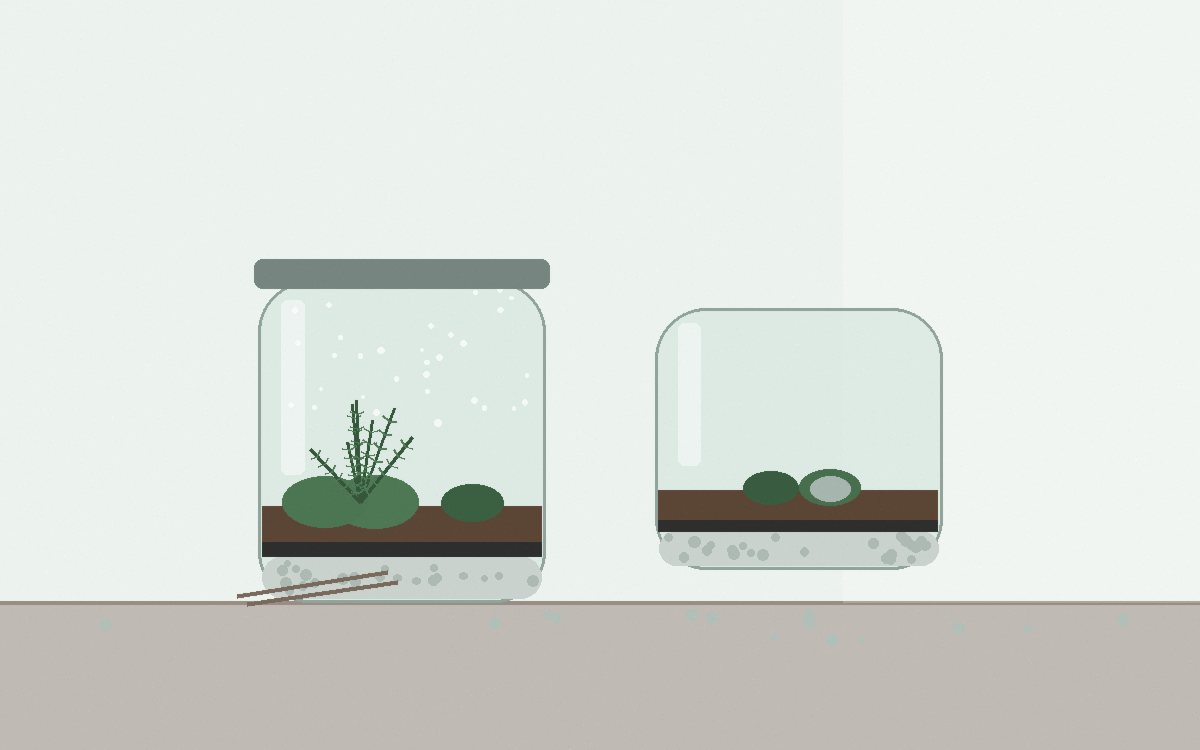
Fog does not mean trouble — fog means the jar is working. Learning to read it is the whole art of watering.
A closed jar has one instrument and it's the glass itself. The fog that forms on it, when it forms, how thick it is and when it clears tells you everything about the moisture inside — and moisture is the only thing you'll ever need to adjust. Learn to read the fog and you will never water a terrarium by guesswork again. Most people read it wrong in the first week, in the same direction: they think fog means trouble. Fog means it's working.
The right rhythm
A jar in a good spot fogs on the upper glass in the cool of the morning, thickest an hour after the room's light comes up, and clears from the top down as the day warms, until by early afternoon you can see straight in. Evening: clear. Overnight: fogging again. That daily breath is the water cycle running at the right volume. If you see it, do nothing — not a mist, not a lid-lift. The jar is exactly right and the most useful thing you can do is watch.
Too wet: the signs
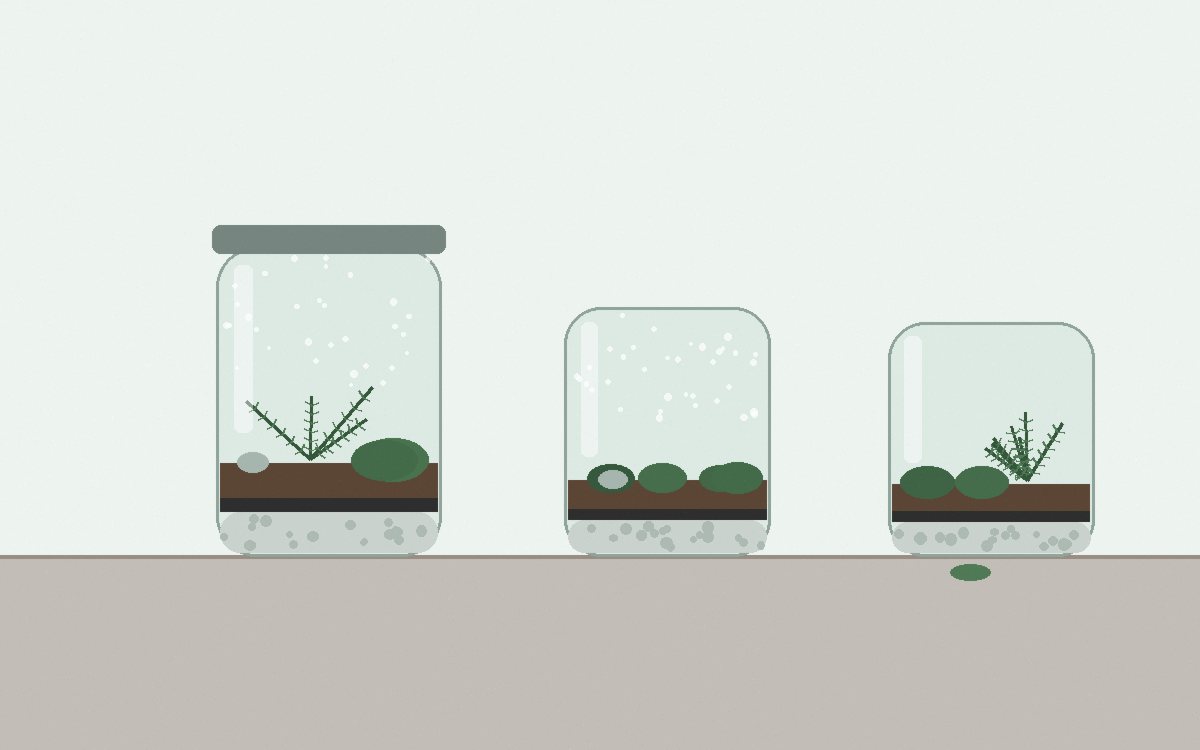
- Fog that never clears, or droplets so heavy they run down the glass in streams all day.
- A visible layer of standing water in the gravel more than a centimetre deep, or water sitting on the barrier.
- Soil dark and glossy rather than dark and matte; moss cushions flattening and going translucent.
- A sour or musty smell when the lid comes off, and fuzz appearing on soil or dead leaves within days.
The fix is air, not surgery: lid off for a few hours in the morning, repeated daily until the morning fog is back to a light haze that clears. A very overwatered jar takes a week or two of daily airing; don't try to rush it by putting it somewhere warm, which cooks the plants. If gravel water stays deep after a fortnight, tilt the jar and draw some out with a turkey baster or a folded paper towel down the side.
The two-hour rule. When you crack a lid for airing, two hours is the unit: enough to lift surplus moisture, not enough to dry the moss. Set the lid ajar in the morning, close at lunch, check the next morning's fog. One or two airings fix most wet jars; a jar that needs airing every day for a month was built with too much water in the substrate and will settle eventually, but slowly.
Too dry: the signs
Rarer in a sealed jar, but it happens after a run of airings or in a jar that was built stingy: no fog at all for two mornings running, moss going pale and crisp at the tips, soil lightening to a dusty brown, a nerve plant collapsing dramatically (its speciality). The fix is a fine misting — ten to twenty sprays across moss and leaves, never a pour — and the lid closed. Check the next morning: haze should be back. If not, mist again. Adjust in small steps; a closed jar amplifies every input.
Seasons and rooms
Fog is temperature-driven, so it changes with the year: heavier in winter when the glass is cold, lighter in summer, sometimes absent in a heated room. A jar that fogs all day in January and not at all in July may be perfectly fine both times — read the soil and moss, not just the glass, and compare week to week rather than day to day. A jar moved to a new room needs a fortnight to find its new rhythm before you judge it.
How often to open
For airing, only as needed. For pleasure — because you'll want to — as little as you can bear. Every lid-off resets the humidity and every poke disturbs the settling. A monthly opening for a glass-clean and a look is a reasonable ration; a jar that's been closed and untouched for six months is often the best-looking one on the shelf.
Questions from the glass
Do I ever water a closed jar again?
Rarely — a well-set jar goes months without. The trigger is the dry signs above, not a calendar. Some of ours have gone a year on nothing but the occasional airing; the water that left through the lid-openings gets replaced by a mist or two, and that's the whole regime.
Should I use tap water or rainwater?
Rainwater or distilled if it's easy, because tap minerals build a white film on the glass and moss over months. If tap is what you have, let it stand overnight and it's fine; the film wipes off at the monthly clean. Don't let the water question stop you building the jar.
The fog is only on one side.
That side is cooler — probably facing the window or a wall. Normal. If it bothers you, turn the jar a quarter turn a week, which also keeps plants growing evenly instead of leaning toward the light.
Fog read — now the question of where it lives: the windowsill trap.